
Sync Shopify Fulfillments to Airtable
In Shopify, a fulfillment records that some or all of an order has shipped. Each fulfillment carries tracking details, the fulfillment service, the status, and the specific line item quantities that left the warehouse. The Shopify admin shows fulfillments inside each order, which makes cross-order reporting and reconciliation slow.
AirPower brings fulfillment data into Airtable. Fulfillments land in one table with tracking details and order links. Fulfillment Line Items land in another with quantities linked to their fulfillment, order, and order line item rows. From there you can build shipment dashboards, reconcile with carriers, or feed downstream workflows.
Both data types are Shopify → Airtable only. Fulfillments sync into Airtable for review and reporting. They cannot be created or edited from Airtable and pushed back to Shopify.
Set up Fulfillments and Fulfillment Line Items
- Open a Shopify → Airtable sync or create a new one
- In Connections, select your Airtable base
- Go to Data & fields
- Click Fulfillments
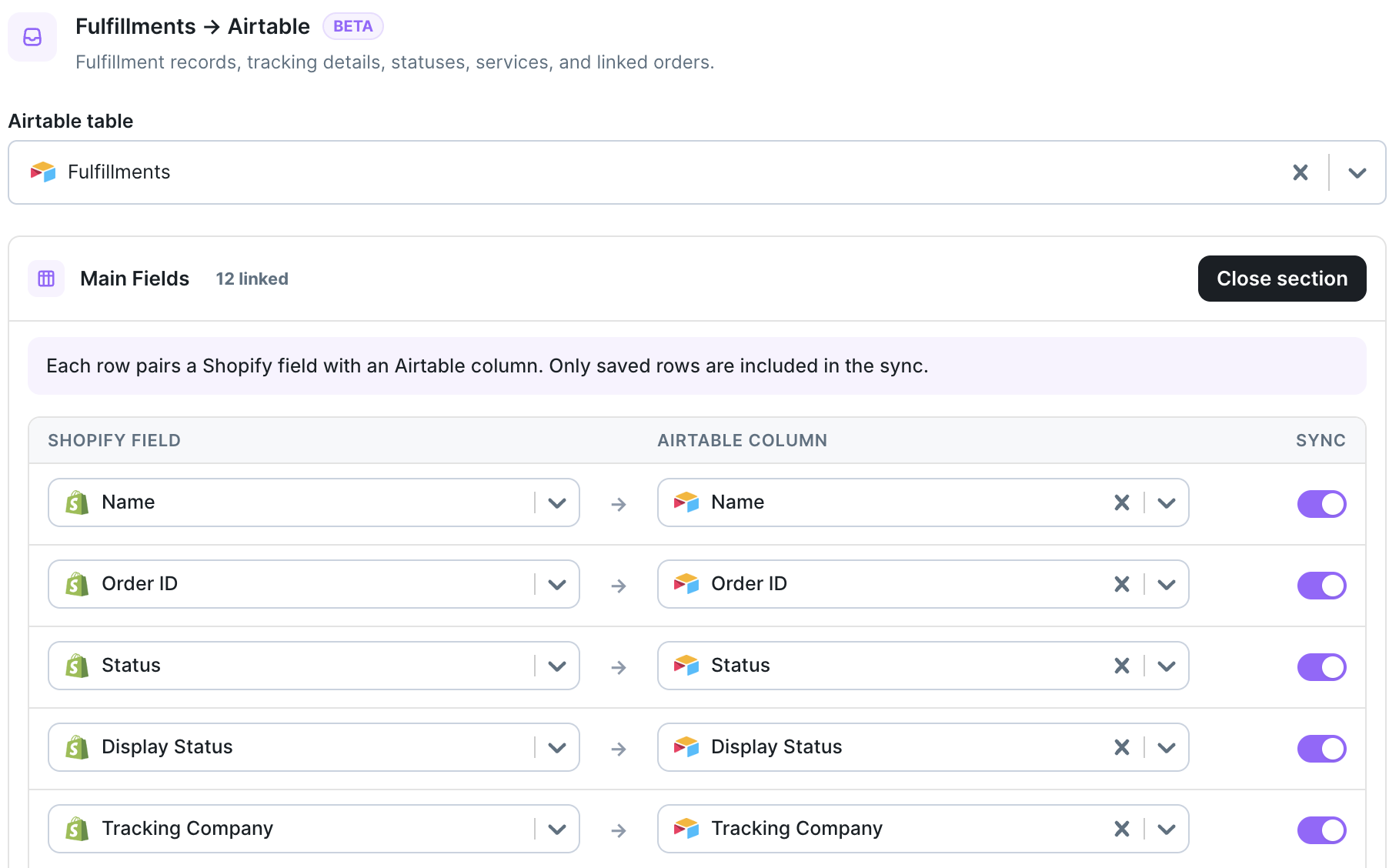
- Select the Airtable table to sync to
- Open the Main Fields pane and map the fulfillment fields you want to track
- Click Save sync
Repeat steps 4–7 for Fulfillment Line Items, using its own Airtable table.
Ongoing sync
Once configured, Shopify sends fulfillment events to AirPower automatically: new fulfillments and status updates appear in Airtable on the sync schedule.
Fulfillment rows link to their parent order rows and to order line item rows when those data types are also configured in the same sync.